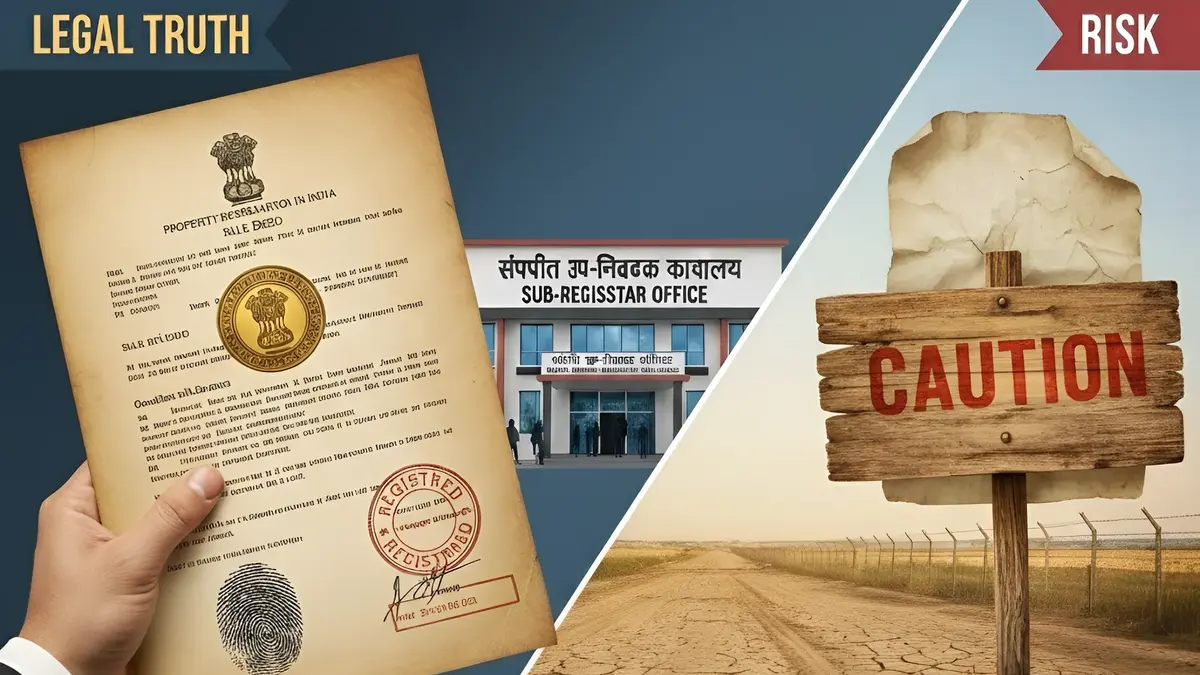
Property Registration in India: Owning land in India is often seen as a symbol of stability and success. Families invest their life savings into plots, homes, and agricultural land with the belief that paperwork equals protection. But property ownership is not secured by payment alone. In India, the real legal shield comes from proper registration. Without it, even a genuine buyer can face serious risks. Understanding how property registration works can save you from years of stress, financial loss, and legal battles.
Registration Is Your Legal Shield
Property registration is not just a bureaucratic step. It is a legal requirement under Indian property laws when transferring immovable property above ₹100 in value. A registered sale deed officially records the transfer in government records through the Sub-Registrar’s office. This makes your ownership public and legally enforceable.
Without registration, the transaction does not gain full legal validity. In disputes, courts rely heavily on registered documents. Registration protects buyers from fraud, false claims, and future ownership challenges.
Agreement Alone Is Not Enough
Many buyers rely only on an Agreement to Sell, assuming it guarantees ownership. This is a costly misunderstanding. An agreement only shows intent to transfer property at a later stage. It does not legally transfer ownership rights.
Until a proper sale deed is executed and registered, the seller remains the legal owner in official records. If disputes arise, the buyer with only an agreement may struggle to prove ownership. Courts consistently prioritize registered sale deeds over unregistered agreements.
Double Sale Can Ruin Dreams
One of the biggest dangers of skipping registration is the risk of double sale. If the seller fraudulently sells the same land to another person and that buyer registers the deed first, the registered buyer generally gets stronger legal standing.
Even if you paid the full amount earlier, failing to register on time weakens your claim. Property fraud cases in India often involve delayed registration. Acting quickly after payment is crucial to secure your rights and prevent manipulation.
Bank Loans Become Impossible
Banks and financial institutions require clear and registered ownership documents before approving loans. If your property is not registered in your name, you cannot mortgage it legally.
Unregistered transactions create gaps in the property’s title chain. During legal verification, these gaps raise red flags. Whether you plan to build, sell, or refinance, proper registration ensures smooth financial transactions. Without it, your land may have little practical value in the formal system.
Possession Does Not Equal Ownership
Many people believe physical possession guarantees ownership. This is not entirely true. While possession may strengthen certain legal claims, it does not replace registration.
If someone challenges your ownership in court, possession alone may not protect you against a registered owner. Legal ownership in India depends heavily on documented and registered title. Staying on the land does not automatically make you the lawful owner.
Inheritance Can Get Complicated
Unregistered property creates serious complications during inheritance. Legal heirs may struggle to transfer the property into their names if the original purchase was never registered properly.
Disputes between family members often arise when paperwork is incomplete. Courts may require extensive proof, which leads to delays and legal expenses. Proper registration during purchase prevents future family conflicts and ensures smoother succession.
Stamp Duty Is Not Optional
Some buyers avoid registration to save on stamp duty and registration charges. This short-term saving can turn into a long-term disaster. Stamp duty is a mandatory government tax on property transactions.
Avoiding it makes the document inadmissible as strong evidence in court. The penalty and legal trouble later can cost far more than the original charges. Paying stamp duty and completing registration legally secures your investment.
Court Battles Are Costly
Property disputes in India can take years to resolve. Without registered documents, proving ownership becomes extremely difficult. Legal fees, emotional stress, and time loss add up quickly.
A properly registered sale deed acts as powerful evidence in court. It simplifies legal proceedings and strengthens your position. Registration may seem like paperwork today, but it can save you from prolonged litigation tomorrow.
Final Word On Ownership
Land ownership in India is not confirmed by payment, promises, or possession alone. It is secured by proper execution and registration of the sale deed. Skipping registration exposes buyers to fraud, double sale, inheritance disputes, loan rejection, and legal uncertainty.
