
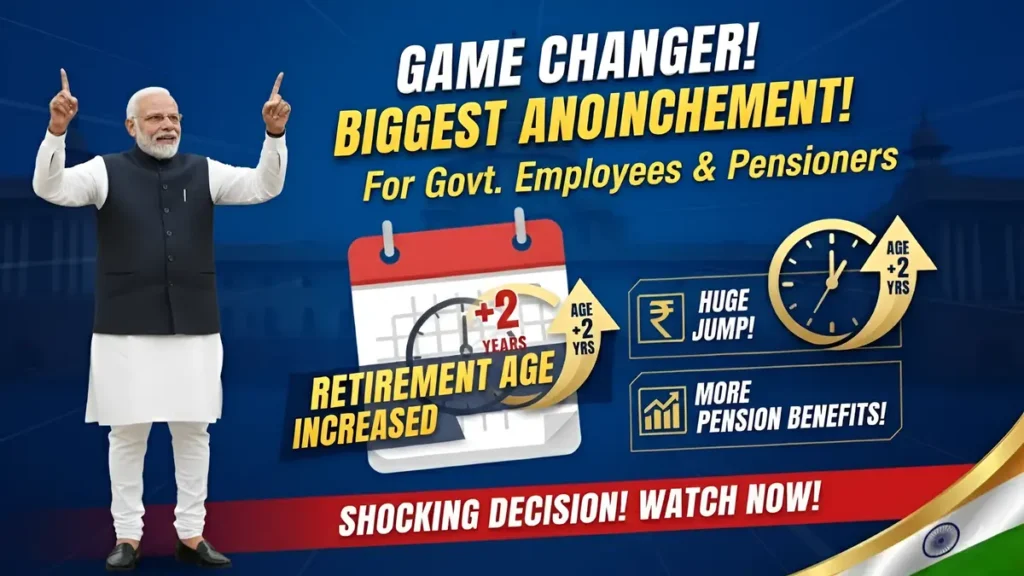
Retirement Age Hike 2026: Retirement plans are rarely expected to change at the last minute, especially for government employees who build their careers around fixed service rules. However, discussions around the Retirement Age Hike 2026 have brought a surprising twist. The proposal to extend the retirement age by two years is drawing attention nationwide. Employees close to superannuation are watching closely, while younger aspirants are trying to understand how this shift could reshape future government recruitment and career timelines.
Two Extra Years Confirmed
The central highlight of the Retirement Age Hike 2026 is the proposed extension of the retirement age from 60 to 62 years for government employees. If formally implemented, this policy would allow eligible staff to continue their service for an additional two years. Authorities are reportedly considering this move to retain experienced professionals and strengthen administrative efficiency. The extension could apply across multiple departments, though final eligibility details will depend on official notifications.
Experience Gets A Strong Vote
One major reason behind this decision is the value of experience in public administration. Senior government employees often handle complex responsibilities, mentor junior officers, and manage large-scale projects. Extending the retirement age ensures continuity in governance and reduces sudden knowledge gaps. With digital reforms and policy transitions underway in many sectors, experienced officials can provide stability and guidance during critical implementation phases, making this extension strategically important.
Financial Cushion For Families
A two-year service extension can significantly improve financial security for employees and their families. Continued salary for two additional years means higher contributions to pension calculations, provident fund savings, and gratuity benefits. Many employees nearing retirement may use this period to repay debts, invest wisely, or build a stronger retirement corpus. In times of rising living expenses, the additional income window could offer meaningful financial comfort and long-term stability.
Recruitment Plans Under Spotlight
The retirement age hike naturally raises concerns among government job aspirants. If senior employees remain in service longer, vacancies may open up at a slower pace. However, policymakers typically balance such reforms with structured recruitment cycles to maintain workforce flow. While short-term adjustments may occur, large-scale government hiring drives are often planned separately based on departmental needs, ensuring opportunities for young candidates continue in the long run.
Pension Burden And Policy Balance
Governments often review retirement policies to manage long-term financial planning. Extending the retirement age can reduce immediate pension outflow since employees remain on payroll instead of entering pension rolls. This shift may help authorities balance salary budgets and pension commitments more effectively. At the same time, careful evaluation is required to ensure that fiscal sustainability and employee welfare both remain priorities within the broader administrative framework.
Employees Must Plan Smartly
For those approaching retirement, staying updated with official announcements is crucial. Employees should review their financial goals, insurance coverage, and investment plans in light of the possible extension. Consulting financial advisors and understanding revised pension calculations can help in making informed decisions. Instead of relying on speculation, waiting for confirmed government orders will ensure clarity and prevent unnecessary confusion regarding service tenure and retirement timelines.
